Key takeaways
- Inspect the ledger, posts, joists and fasteners before you cover them.
- Soft wood, rust and movement are warning signs.
- Repair first, then underdeck, because the framing will be hidden.
- Joist tape and flashing extend the life of an older deck.
Why inspect first
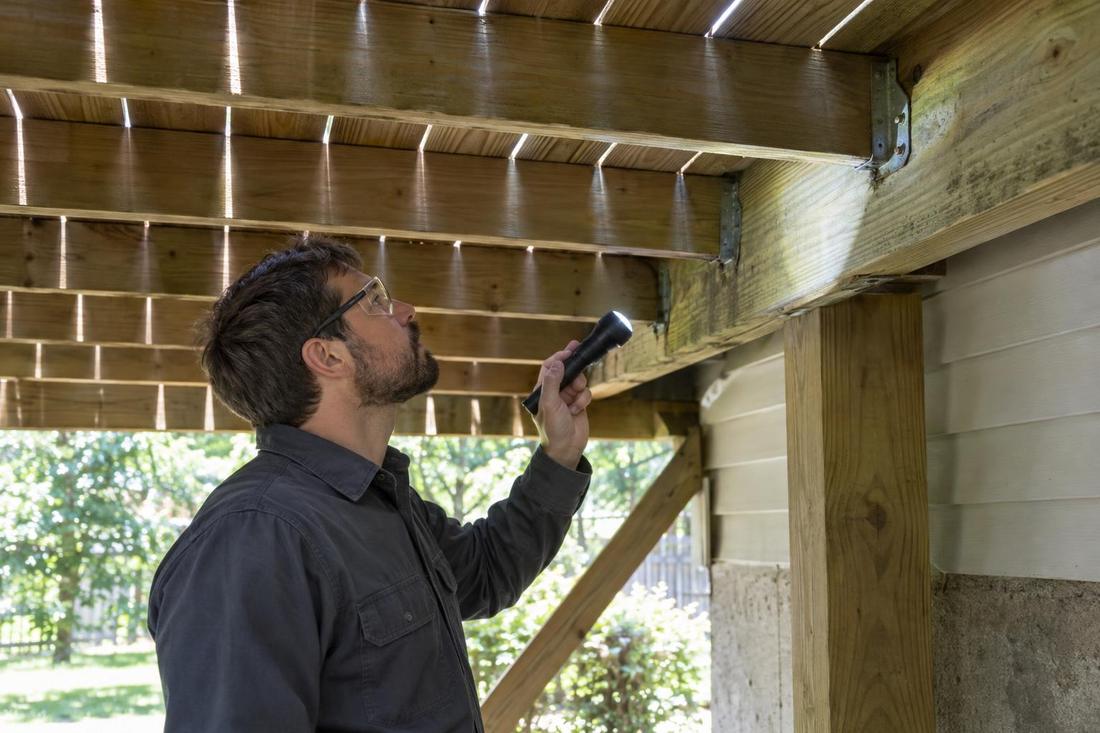
Once the underdecking is in, the framing is hard to see. If there is hidden rot or a weak ledger, you want to know before it is covered. A thorough inspection is the smartest first step.
It also tells you what repairs to budget for.
What to look for
Check where the deck attaches to the house, at the base of each post, along the bottoms of the joists and around fasteners. Probe wood with a screwdriver. Look for rust, stains, cracks and movement when you walk across the deck.
Take photos so you can compare over time.
Common repairs
Repairs often include replacing a few joists, fixing the ledger and flashing, adding post bases and replacing damaged boards. Fresh framing gets protective tape and the right fasteners.
These repairs are far easier before the ceiling goes up.
Safety and codes
If you see serious sag, a loose ledger or leaning posts, stay off the deck until it is checked. Rules about decks vary, and your local codes office, such as Metro Nashville Codes, can answer permit questions.
A qualified contractor can explain what the work involves.
Official sources and further reading
- Metro Nashville Codes
- Tennessee Department of Commerce & Insurance: Contractors
- National Association of Home Builders
These are independent organizations. Links open in a new tab.
Quick answers
Is my old deck good enough to underdeck?
Many are, after inspection and any needed repairs.
How long do repairs take?
It depends on the damage. Many repairs take a day or two.