Key takeaways
- Water must always have a clear path from the ceiling to a safe outlet.
- A gutter at the low edge collects the water and feeds a downspout.
- Downspouts should discharge away from the foundation.
- Keeping the gutter clean prevents overflow.
From the ceiling to the gutter
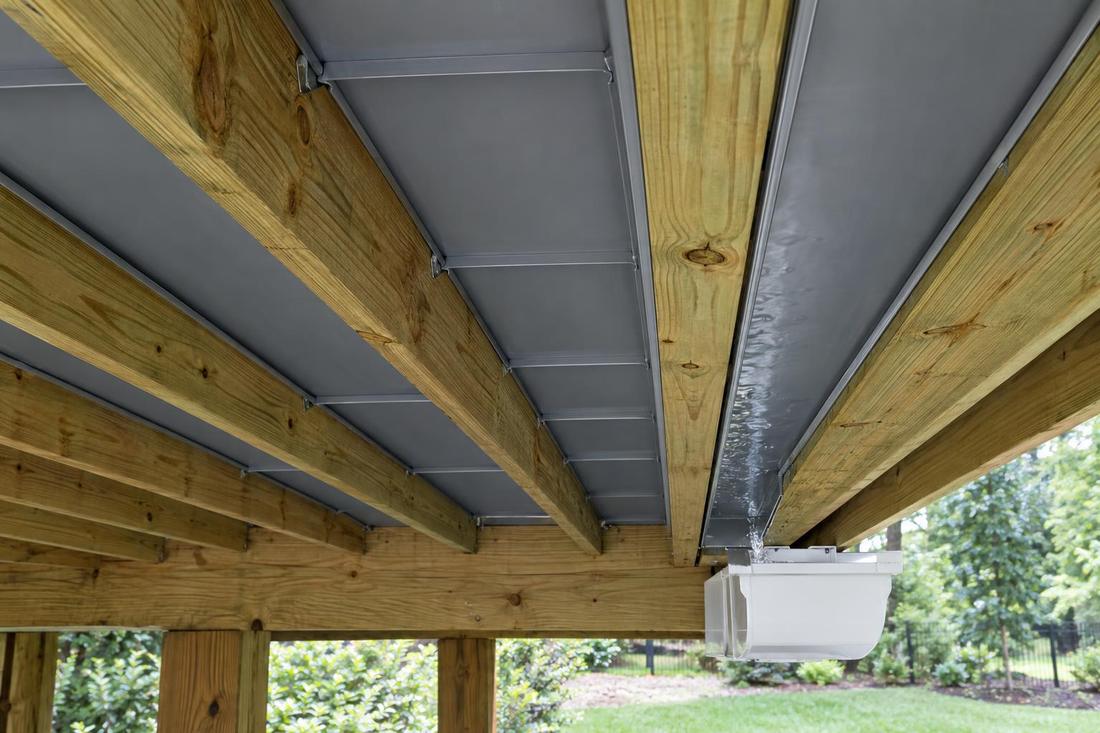
An underdeck system is sloped so water runs toward the outer edge. There, a gutter collects it and moves it to one or more downspouts. The slope and the seams decide whether the system works.
A gentle slope is enough if it is consistent.
Downspouts and outlets
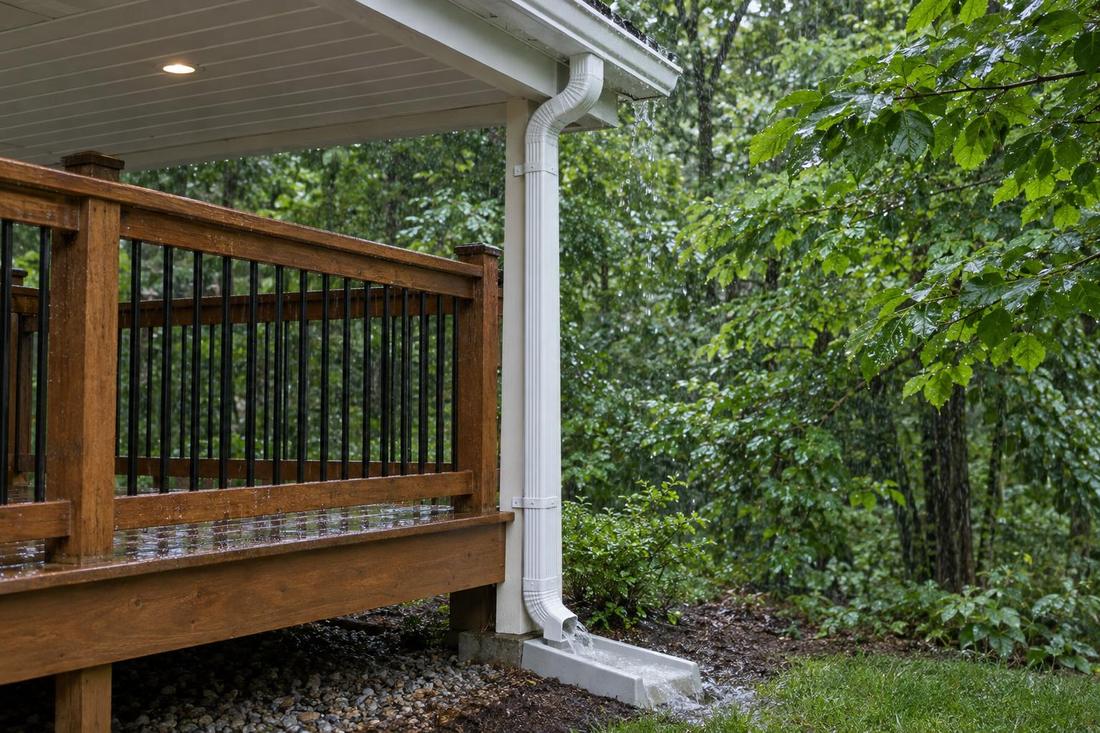
A downspout can empty onto a splash block, connect to a buried pipe or tie into a drainage line. The key is to discharge far enough from the house and from the deck footings.
Avoid dumping water where it will run back toward the foundation.
Buried lines and drains
On flat or clay ground, a buried pipe or a French drain carries water to a lower area or the street where it is allowed. Cleanouts make maintenance easier.
Plan the route before the deck is covered.
Keeping it clear
Leaves and seeds clog gutters. Clear them in spring and fall and check the downspout after storms. A quick garden hose test shows whether water flows freely.
Simple upkeep prevents most problems.
Official sources and further reading
These are independent organizations. Links open in a new tab.
Quick answers
How many downspouts do I need?
It depends on the roof area and the length of the run. Longer decks often need more than one.
Can the water go into my yard?
Often yes, if it flows away from the house and neighbors.